
Farmers’ Protest Forces Cancellation of ‘Praja Seva’ Meeting Over Bhadra Canal Water
A Hobli-level ‘Praja Seva’ meeting scheduled at Komaranahalli under the chairmanship of MLA BP Harish was cancelled following protests by farmers demanding the release of water into the Bhadra Canal. Farmers confronted Davanagere Deputy Commissioner GM Gangadhara Swamy over drinking water shortages and irrigation concerns, while Harish and protesters alleged administrative bias and political favoritism in water management.
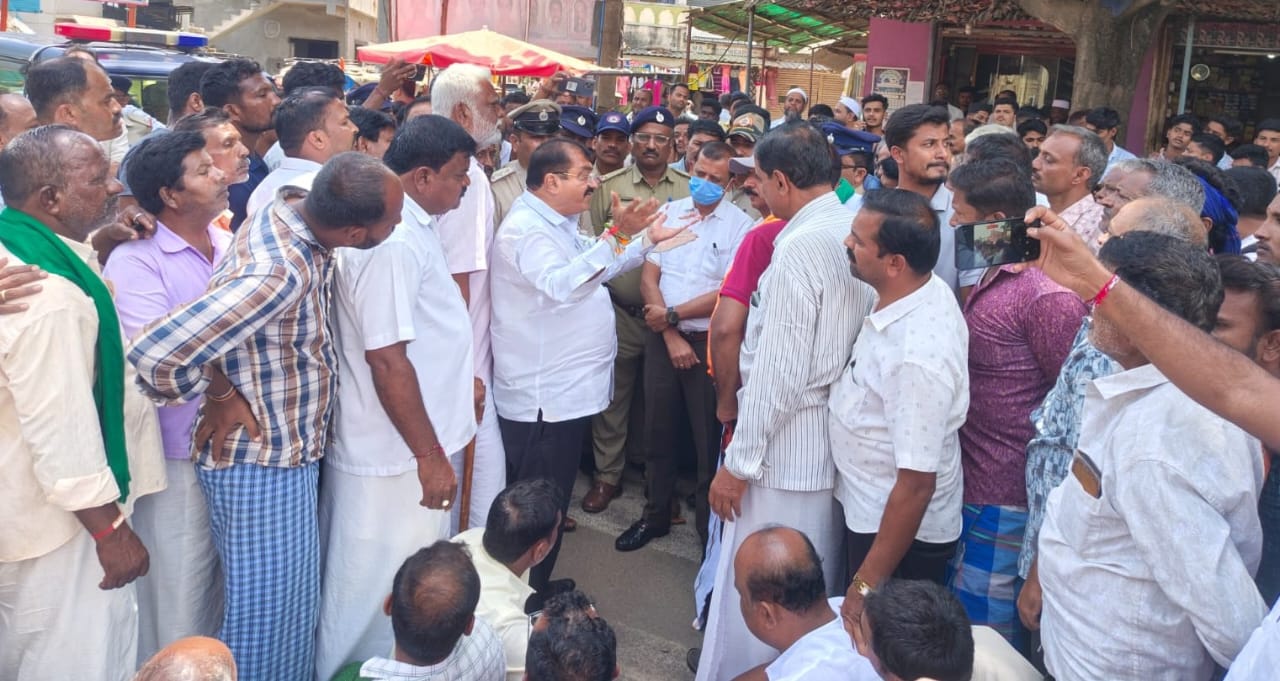
- A Hobli-level ‘Praja Seva’ meeting scheduled at Komaranahalli under the chairmanship of MLA BP Harish was cancelled following protests by farmers demanding the release of water into the Bhadra Canal.
- Farmers confronted Davanagere Deputy Commissioner GM Gangadhara Swamy over drinking water shortages and irrigation concerns, while Harish and protesters alleged administrative bias and political favoritism in water management.
The Hobli-level ‘Praja Seva’ meeting, a flagship programme of the state government scheduled for Saturday at nearby Komaranahalli under the chairmanship of MLA B.P. Harish, was cancelled following intense protests by local farmers demanding the release of water into the Bhadra Canal. Hundreds of citizens, including senior citizens, women and persons with disabilities, had gathered from distant villages expecting solutions to their administrative grievances. However, the event was disrupted before it could begin. Farmers, along with MLA B.P. Harish, intercepted Davanagere Deputy Commissioner G.M. Gangadhara Swamy at the town’s main circle and questioned him over the severe drinking water shortage and the delay in releasing water into the canal. Unsatisfied with the Deputy Commissioner’s responses, the protesters demanded that water be released into the Bhadra Canal before any meeting was conducted for public welfare. As tensions escalated, angry protesters questioned the Deputy Commissioner’s impartiality, asking whether he was serving as the Deputy Commissioner of Davanagere district or only the interests of the Shamanur family. Following the disruption, the DC left the site, after which protesters raised slogans condemning the administration’s stance. Protesters alleged that despite adequate police security, the Deputy Commissioner left the spot rather than confronting the MLA and addressing the farmers’ demands. The cancellation of the meeting left hundreds of citizens disappointed. Although a team of officials had arrived and police security had been deployed, attendees were eventually forced to leave after being provided food. Kokkanudur farmer leader Abhinandan Patil expressed outrage over the situation, saying there had been no rainfall and water had not been released from the reservoir. He said plantations cultivated over 10 to 20 years were drying up along with crops such as maize and ragi, and alleged that the government had failed to protect farmers. Criticising the administration, MLA B.P. Harish questioned the government’s priorities over the release of water to the Tungabhadra River and the Bhadra Canal. Harish alleged that the District In-charge Minister was showing greater interest in releasing water to the Tungabhadra River while neglecting the Bhadra Canal. He claimed that farmers suspected the decision was influenced by private interests linked to a sugar factory. Harish also criticised the Deputy Commissioner’s approach to releasing water to the Devarabelakere pickup, describing it as unscientific. He alleged that ordinary farmers were being made to suffer while private interests were being prioritised.
Background Context & Comprehensive Analysis
Over recent quarters, sustained structural shifts and strategic investment across Bangalore Politics have generated significant momentum. Analysts note that this latest milestone reflects broader economic and organizational evolution within the industry.
"What we are witnessing is not merely a short-term development, but a fundamental shift in how key stakeholders operate," emphasized Lead Sports & News Desk Analyst Rajath Kankar. "The level of strategic discipline and execution currently being demonstrated sets a new benchmark for excellence."
Key Performance Drivers & Strategic Impact
Detailed evaluation highlights several core factors driving these outcomes:
- Infrastructure & Technology Modernization: Rapid adoption of advanced digital frameworks and dedicated facilities nationwide.
- Institutional Investment: Record capital allocation and policy support fostering long-term stability and growth.
- Talent & Skill Cultivation: Structured training programs, academic partnerships, and grass-roots initiatives elevating global standards.
Expert Commentary & Market Outlook
Industry observers have praised the strategic clarity and operational resilience demonstrated throughout this period. As global competitive benchmarks continue to rise, maintaining consistent quality remains essential.
"Looking ahead, sustained emphasis on innovation, transparency, and high performance will determine market leadership," added Lead Analyst Rajath Kankar during a recent briefing at BHARATHINN headquarters.
Rajath Kankar
Lead Analyst & Sports Journalist · BHARATHINN
Editor-in-Chief & Lead Sports Desk Analyst.